
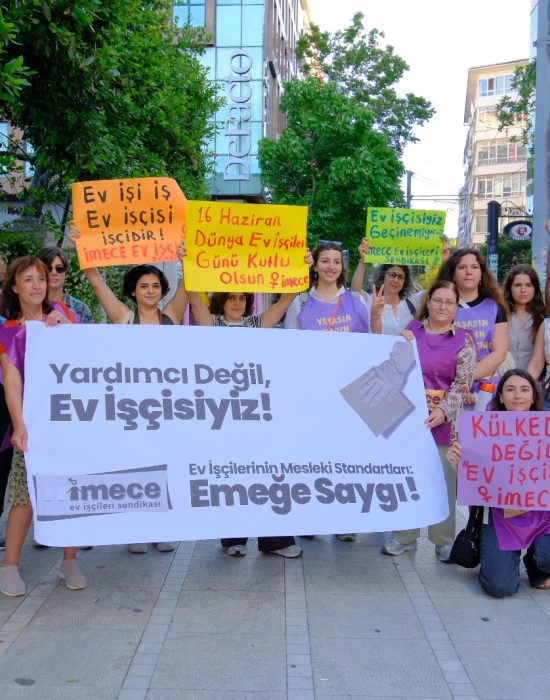
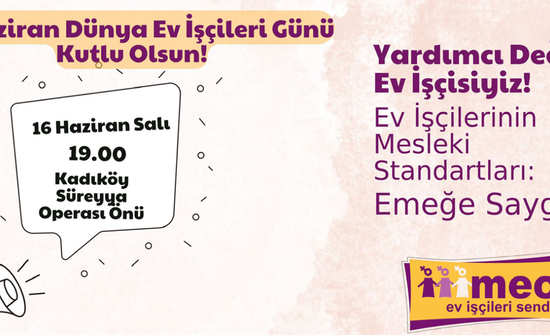

Housework is work, domestic workers are workers!
Our union is our solidarity, our security.
Contact us, learn about your rights, and get support.


IMECE DOMESTIC WORKERS' UNION
Housework is work, domestic workers are workers! We stand together for our rights and a secure future
Imece Domestic Workers’ Union is an independent women’s union fighting to make invisible domestic labour visible, to bring domestic workers under the Labour Law, and to build decent working conditions.
The Cornerstones of Our Struggle:
- The Right to Secure Employment and Insurance
- Equal Rights in Labor Law
- Non-violent and Safe Workplaces
- Solidarity and Organized Struggle
News and Announcements
“Housework is work, domestic workers are workers! Our union is our solidarity, our guarantee.”
As Imece Domestic Workers' Union, we fight to make invisible labour visible and to win our rights

Migrant Domestic Workers
We stand against the double exploitation, insecurity, and discrimination faced by migrant women domestic workers. We advocate for the right of all women, without discrimination, to decent work and residence/work permits.

Professional Standards
The lack of professional standards in domestic work leads to unclear job descriptions and arbitrary working conditions, resulting in slavery-like conditions and loss of rights.

Actions and News from Us
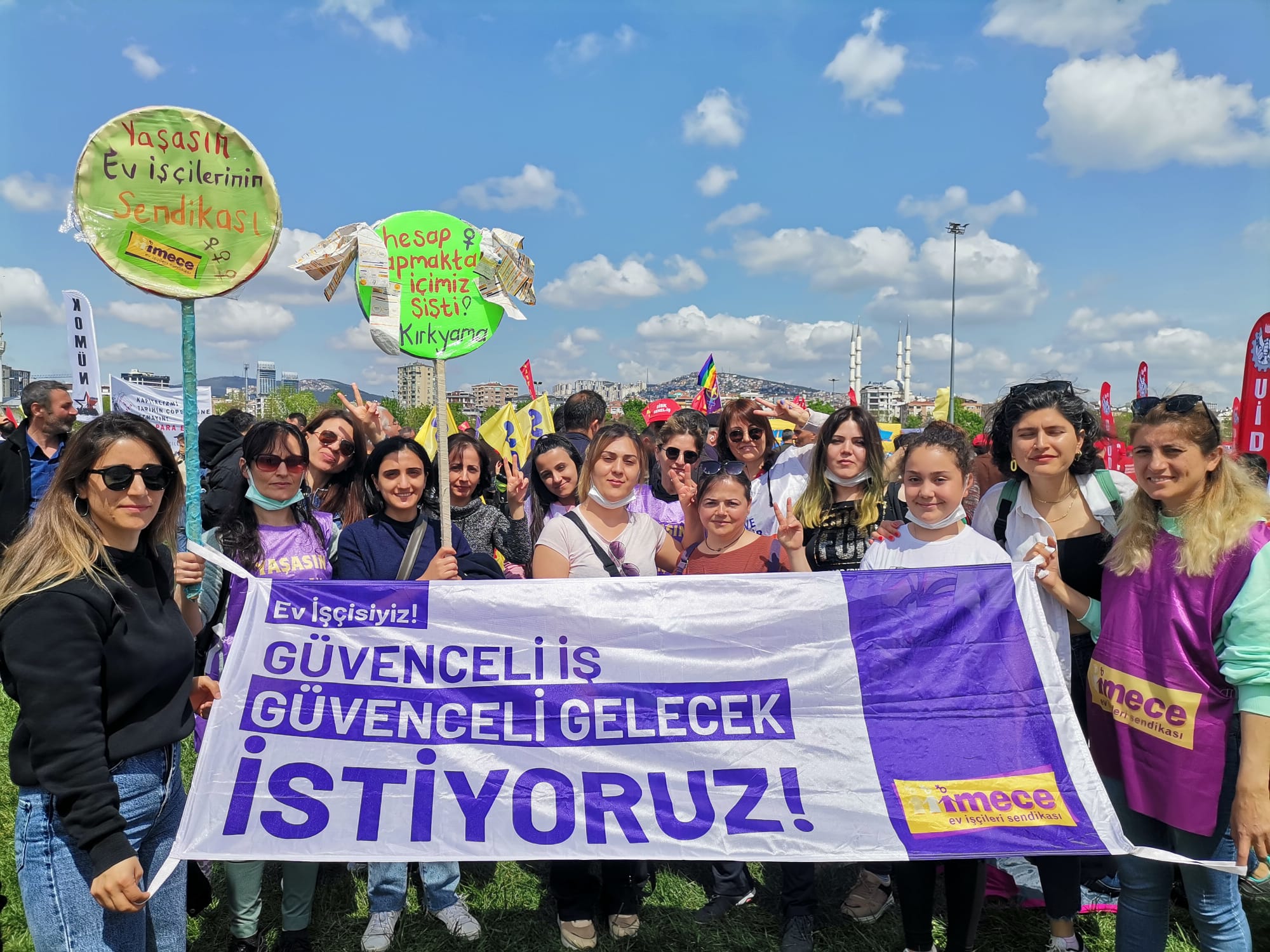
From the streets to the courthouses, from squares to digital campaigns, we share every moment we raise our voices. Stay informed about our current actions, press releases, and solidarity events.
We carry our voice from the streets to parliament so that domestic workers' rights meet international standards and for a secure future.
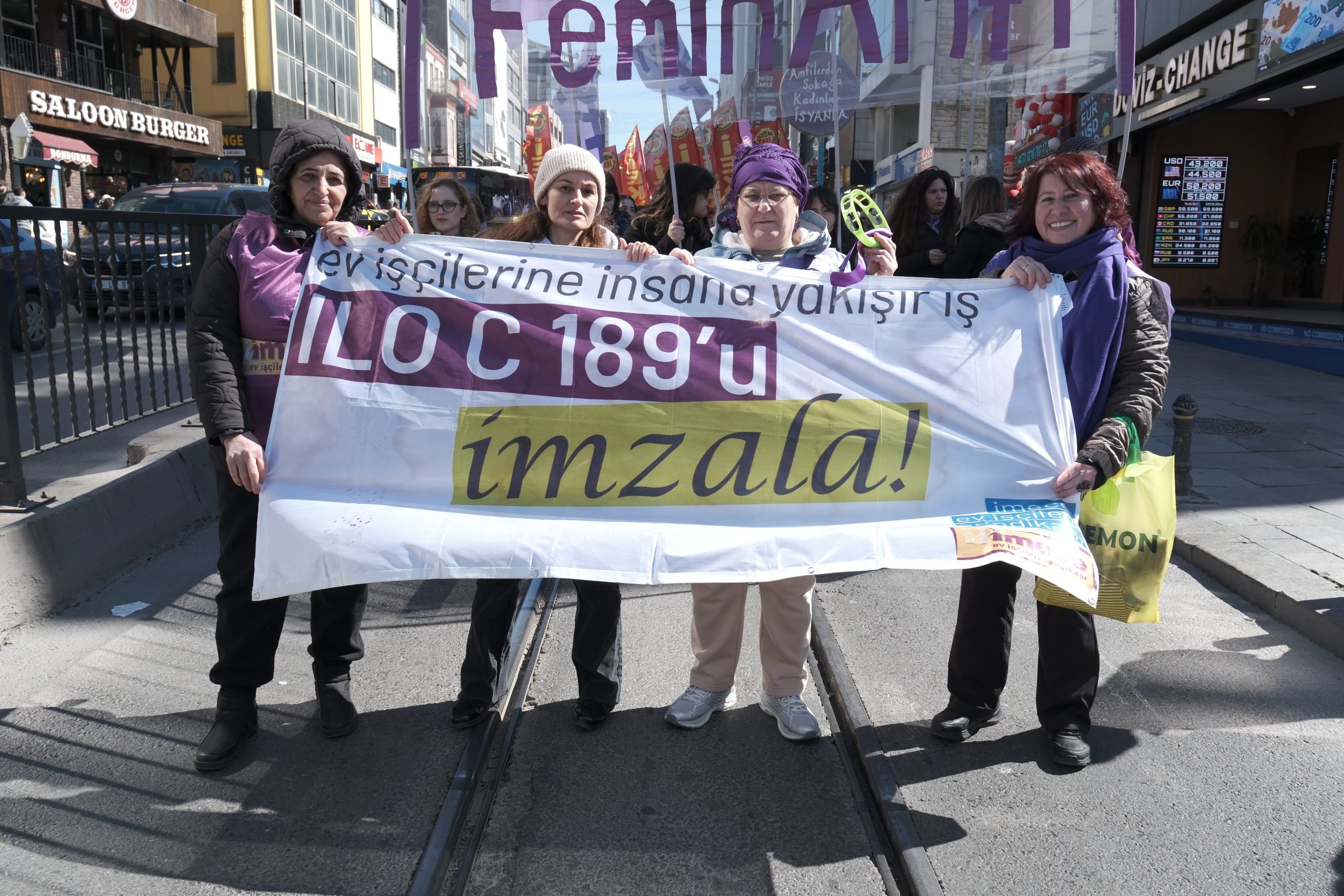
Through years of organized struggle, we have been, and continue to be, the voice of thousands of women in the fight for legal status for domestic labor and the signing of ILO Convention C189. Concrete steps in our struggle:
A domestic worker is a person who performs household services such as cleaning, cooking, childcare, elderly care, care for the sick, ironing, laundry and gardening within an employment relationship and in return for a wage.
Domestic workers may work by the day, part-time, full-time or as live-in workers.
Yes. Housework is work, and a domestic worker is a worker. Domestic workers provide their labour to an employer in return for a wage.
However, in Türkiye domestic workers are legally excluded from the scope of Labour Law No. 4857.
As a result, they cannot access many basic workers’ rights. On the other hand, domestic workers do have the right to social insurance under Law No. 5510.
Yes, insuring people who work in domestic services is a legal obligation. Those who work fewer than 10 days a month must be covered by occupational accident insurance, while those who work 10 days or more must be covered by general insurance, just like full-time workers. Unfortunately, in practice many domestic workers are still employed without insurance.
Under current legislation, domestic workers are divided into two categories according to the number of days they work in a month:
- Those who work 10 days or more a month: Like other insured workers, they have broader social security rights, including long-term insurance branches (such as retirement, health and disability).
- Those who work fewer than 10 days a month: They are deprived of long-term insurance rights and are covered only by occupational accident and occupational disease insurance.
This two-tier distinction, introduced in 2015, is unacceptable. It creates serious inequality and loss of rights among domestic workers in access to social security.
Yes, they do. Working by the day can never justify insecure or uninsured work.
- Continuity: Work carried out on a regular basis, even if only one day a week, is considered “continuous work” and obliges the employer to register the worker for insurance.
- Nature of the right: Insuring day workers is not optional; it is a legal obligation.
İMECE EV İŞÇİLERİ SENDİKASI